----------------------------------------------------------------------
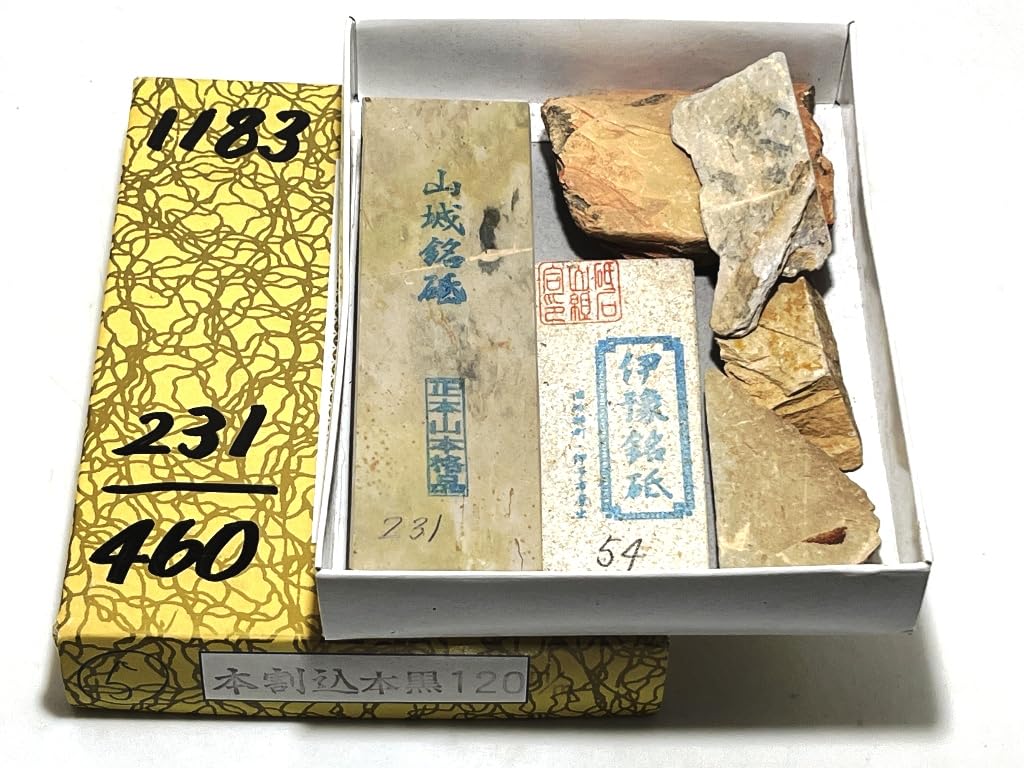
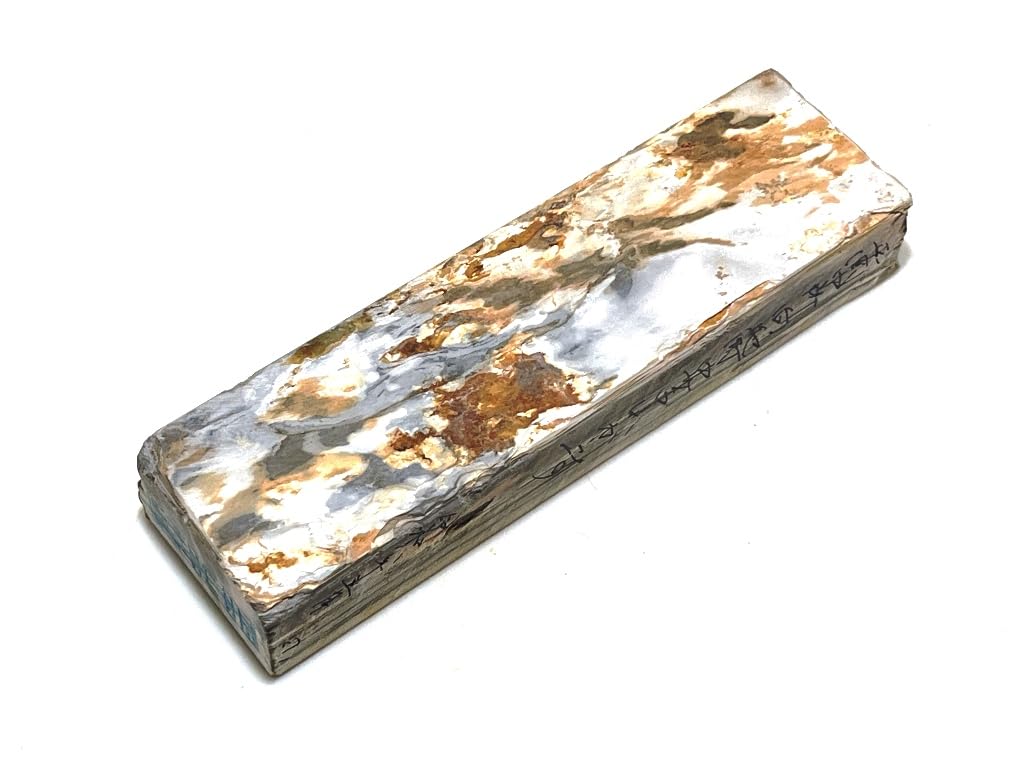
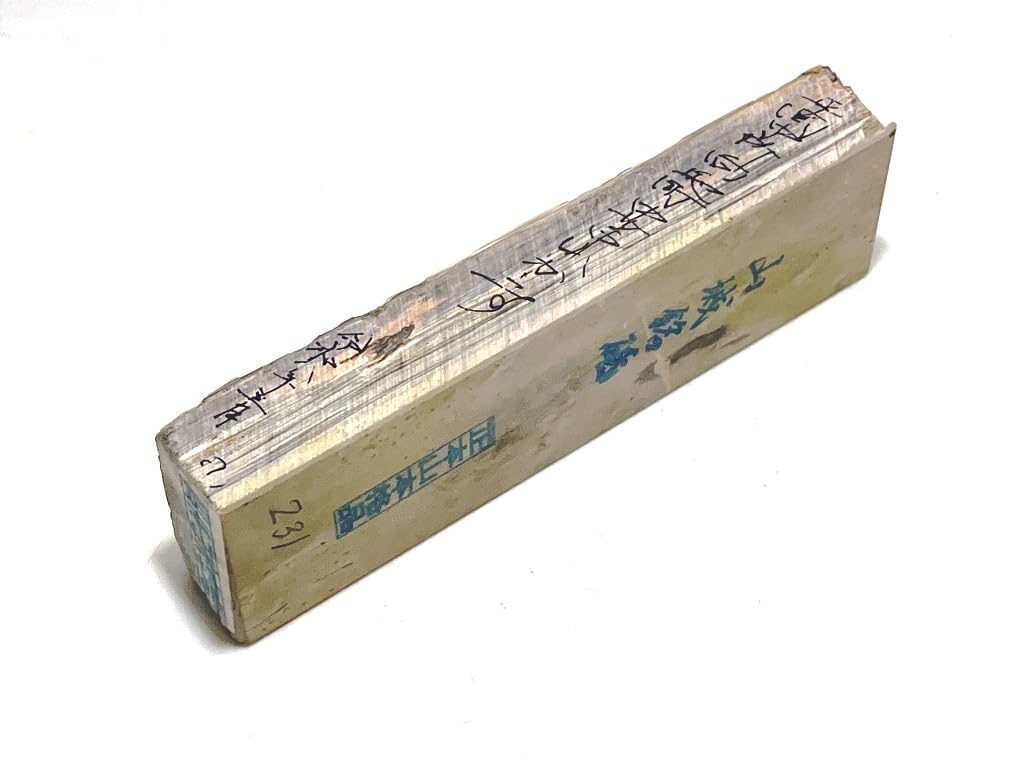
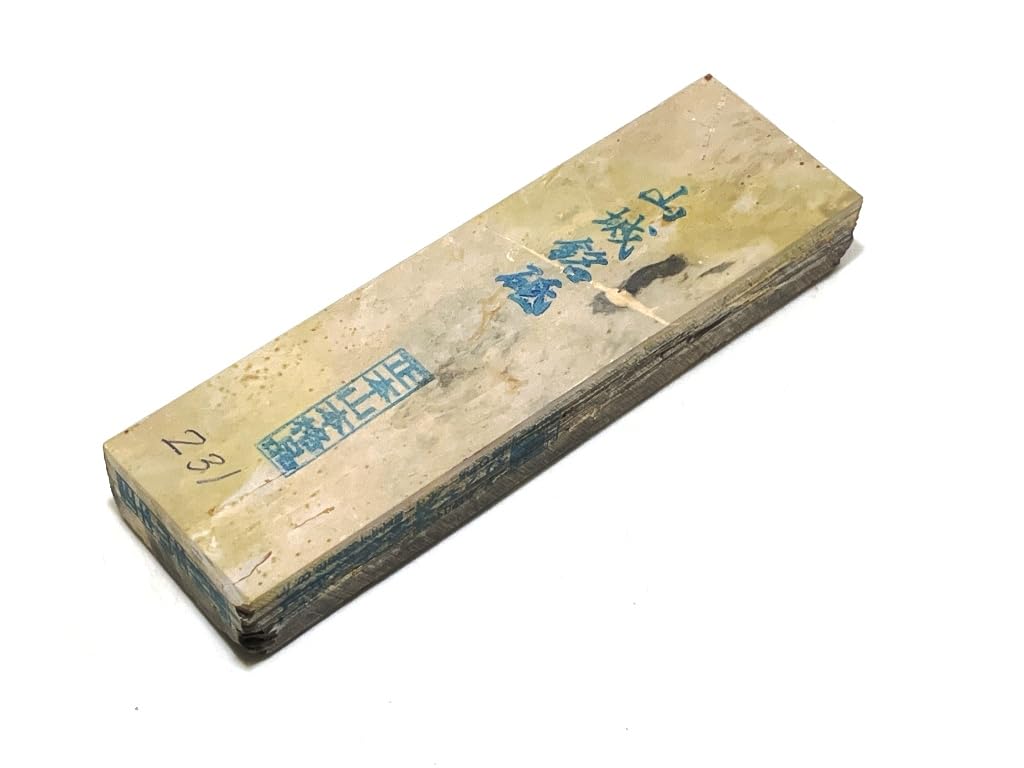
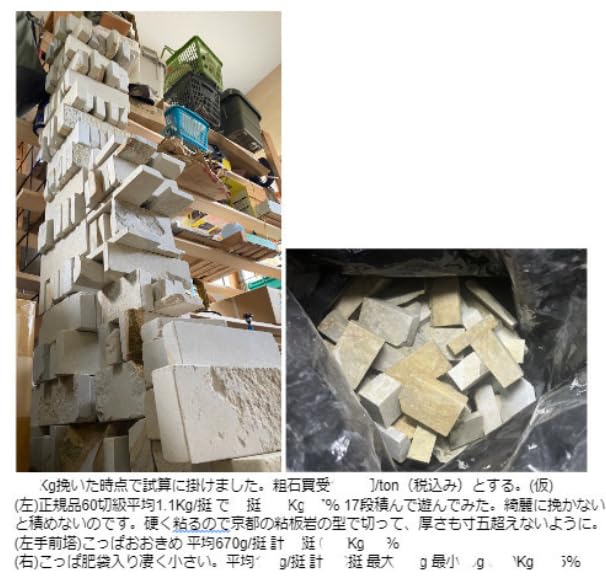
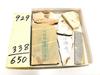
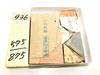
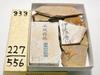
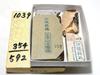
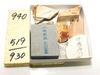
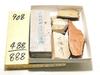
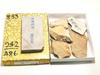
Contains one finished whetstone weighing 231g. The size is indicated by the outer dimensions of the box. The total weight of one whetstone, including the outer box and the rough forging stone, is 460g. These are medium to high-grade whetstones from Iyo Province or Shohonzan Yamashiro Province, with the miner's name handwritten on them as a measure against misrepresentation of origin and counterfeit products. The forging scraps as shown in the image are placed in the margin and sealed. The rough stone scraps do not have names written on them, so please judge their physical properties by touching them yourself. Suitable for avant-garde individuals with competitive and training elements.
Neutral and rust-resistant, Iyo stone from Karakawa Murayama, dating back to the feudal era, revived after half a century! ! https://bit.ly/IyoMIkantsubu 10 Higonokami knives. Box outer dimensions (approx.): 12 x 15 x 2.8~5.4 cm. Thickness varies. (Actually overflows and bulges) Total weight including box: approx. 460g. Zero gacha element, which many customers have requested. You will receive the stone exactly as pictured.
Please polish any rough edges to make them flat. If it's unstable, place a damp cloth underneath or use silicone adhesive on a non-deforming stand. Mining is done with heavy machinery, and cutting is done with diamond tombstone cutters. We are not involved with whetstones bearing the "Iyo Meito" name, as they are imitations and unauthorized branded products. Since around 2007, only whetstones bearing the "Iyo Meito" name have been made by Sazare Meito. To distinguish them, the names on all whetstones except the small pieces are handwritten. We cannot answer inquiries about "Iyo Meito" whetstones that have been processed and manufactured by other companies.
Siliceous slate from Umegahata, Ukyo-ku, Kyoto City, Yamashiro Province. Grit size #6,000 to 24,000. Harder stones require more practice, but the probability of achieving a finer finish increases. Due to the rounded bottom and continuous grooves, it maintains its sharpness for about 70% of its lifespan, and with artificial stone grit ratios, it is less likely to produce a dull, mirror-like finish, making it easier to bring out contrasts derived from the weld lines, material, and carbon content differences.
The darker the rock, the harder and finer the stone tends to be. Since hardness reduces the sharpness, sharpening should be done by applying a nagura (a type of stone for sharpening) as needed, depending on the purpose and skill level.
The power of locally produced and made products!!
See above for box dimensions. Weight is listed as packaged weight. Please use this for size comparison.
Because of its clearly defined foliation, it offers excellent workability and yield when breaking into smaller pieces. We encourage you to try surface preparation and breaking into smaller pieces yourself to experience the difference in properties and performance of the grinding wheel.
It contains various types, sizes, and shapes. For sharpening tools, use stones that are large enough to create a flat surface. For those that are not, break them into smaller pieces and use them in the same way as for sharpening swords.
This collection consists solely of the easternmost first-class ore deposit in Ukyo Ward, Kyoto City, plus comparative samples.
Umegahata whetstones are found only in Shobudani, famous as the birthplace of Kyoto whetstones, which extends from Umegahata Mukai-no-chi, known for Nakayama and Beniyama, through Okudono-cho, the king of the Suita Formation.
This set is not made up of stones that are not of average quality and have been padded with other stones; the way they break reveals their authenticity. The stones were primarily forged by trainees under the supervision of a master of the Yamamoto style forging technique with over 15 years of experience. I believe they have managed to break and select the stones quite skillfully, resulting in a variety of colorful pieces, so please check the images for details.
Please try breaking them open yourself to see the significant differences in their physical properties, including the strikingly different color saturation. (Prepare a flathead screwdriver, hammer, safety glasses, gloves, etc.)
If you find one soft red pin, you're lucky. (Sorry, this is lot-dependent.)
From this clearly structured ore, a flat, film-like flake-like slurry easily emerges.
The abrasive particles are arranged in a directional pattern on the flakes, resulting in surprisingly strong grinding performance.
Under conditions where water supply is restricted, the flakes are crushed and the particle size increases.
The slip between the flakes is smoothed by the viscous feldspar and mica mineral slurry acting as a lubricant, resulting in a light and gliding sensation.
To put it in historical terms, they wet kelp to slide and pull the heavy stone materials for the Osaka Castle walls. Imagine replacing the kelp with crushed flakes.
If you sharpen with too many flakes that haven't been completely crushed and apply too much pressure, the overlapping areas of the flakes and the strong grinding ability originating from Yamashiro Province make post-processing easier, but it can create shallow scratches on the soft base metal.
Adjustments to the amount of pressure applied, the sharpening angle, the amount of slurry, and the degree of water added will greatly improve the appearance of these shallow scratches as your skill level increases.
It's recommended because you can easily self-assess your skill development by visually reviewing the results.
In the early stages of becoming a skilled flake user, you'll likely find the aforementioned kelp attack incredibly helpful against under-trained flakes or those from other countries that are hard and stiff.
This might inspire you to try again with those tough, unruly whetstones you've given up on or put away in storage. After all, the real skill of a master whetstone craftsman is to discard the thickness and remove the unruly grain through forging...
In the market, there's a tendency for profit margins to be large due to shortcuts in manufacturing where thickness and size are paramount, so there's a good chance there will be opportunities to use soft red slip.




 No-delivery refund








![[Tennen Toishi] Yamashiro Meito Stone, 433gwith Iyo Meito Stone, 870g Total (10 Pieces)](https://img.joomcdn.net/7de1854e4579ac2d64c152ad2154ac085c2f9abd_100_100.jpeg)