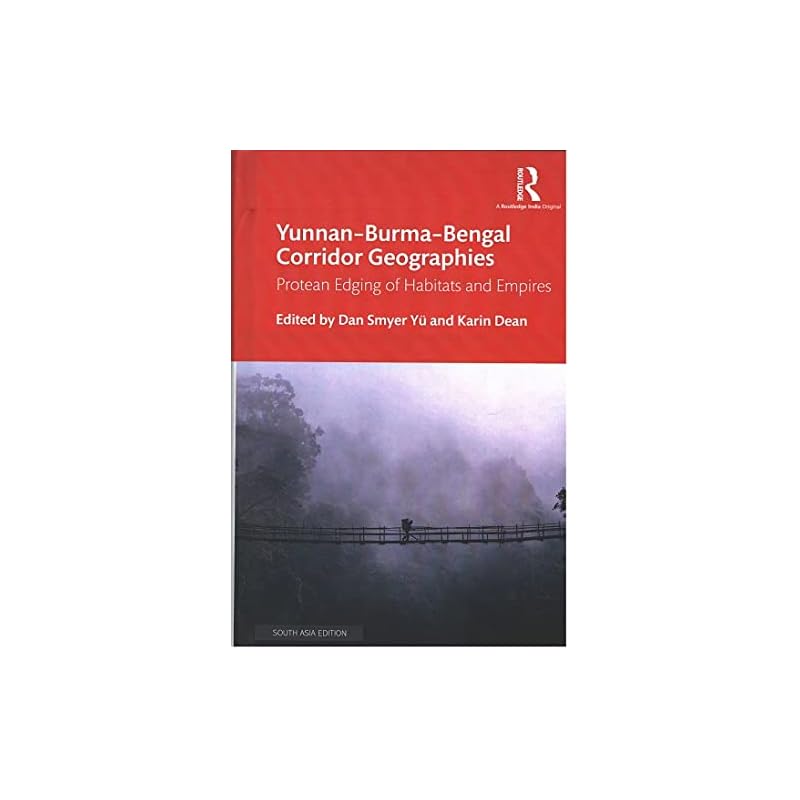
This book explores the historical interconnections between Bengal, Burma, and Yunnan (China), and views the corridor as a transregion that exhibits mobility, connectivity and diversity as well as placebased ecogeological uniqueness. With a focus on the concept of corridor geographies that have shared human and environmental histories beyond sharply demarcated territorial sovereignties of modern individual nationstates, it presents the variety and complexity of premodern and modern pathways, corridors, borders, and networks of livelihoodmaking, local political alliances, trade and commerce, religions, political systems, and colonial encounters. The book discusses crucial themes including environmental edgings of humannonhuman habitats, transregional migratory routes and habitats of megafauna, elephant corridors in Yunnan Myanmar Bengal landscape, framing spaces between India and China, Tibetan Myanmar corridors, transboundary river systems, narratives of a Rohingya jade trader, crossborder flow of Deangs fermented tea, householding in upland Laos, cultural identities, and transborder livelihoods.Comprehensive and topical, with its wideranging case studies, this book will be of interest to scholars and researchers of history, routes and border studies, sociology and social anthropology, South East Asian history, South Asian history, Chinese studies, environmental history, human geography, international relations, ecology, and cultural studies.


 No-delivery refund






![Royal History Of Gurjara Dynasty : PartI [Paperback] K. . Munshi](https://img.joomcdn.net/af08722ec6d5d3cbcd65d9676ba8f6c7b79f6d1a_100_100.jpeg)