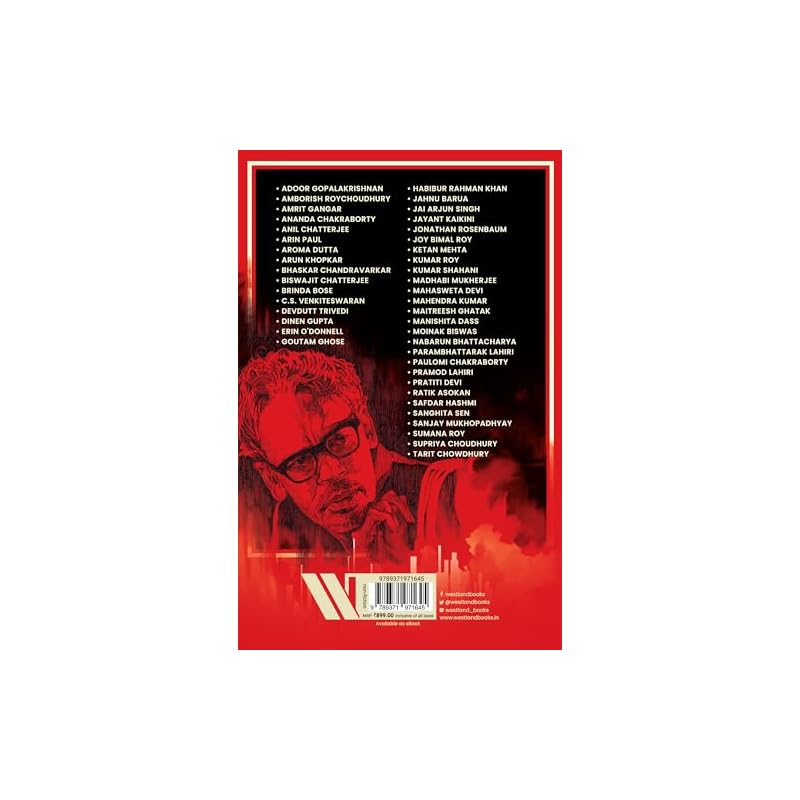
About the Book FIFTY ESSAYS ON ONE OF INDIA'S MOST CONSEQUENTIAL AND CONTROVERSIAL FILMMAKERSA MAN UNDERAPPRECIATED IN HIS TIME AND UNDERSTUDIED AT HOME.Who saidyou cannot wound flowing water?Here the river itself was the weaponto break a big home.
Jayant Kaikini Ritwik Ghatak died a broken, ravaged man.
Almost every film he made failed at the box office at the timeif they were released at alland his life and family were in a shambles, his partitioned Bengal was no closer to, no rapprochement with the left parties was in sight.
But Safdar Hashmi describes the day he died, 6 February 1976, thus: hundreds of people thronged the hospital he lay in, and as the funeral procession began in the afternoon, thousands joined in, singing all the way to the burning ghat.If he wasn't feted in his time, Ghatak's relevance has only grown globally since: the bold innovations of his humanist cinema, the depth of his engagement with the lives of the people and his uncompromising vision for true revolution steeped in the history and culture of the land.
And all the while, the mystique that had always surrounded him only swirled more fiercely.Unflinching and even ruthless, alcoholic and irresponsible, an irrepressible genius, a master of the craft of filmmaking and a relentless innovator: these fifty essaysby his collaborators and family, academics who study him and writers who admire himcelebrate Ghatak on his centenary through reflections and expressions of love.About the Editor Shamya Dasgupta is a sports journalist by profession, currently working as deputy editor with ESPNcricinfo, and a cinema enthusiast.
He's the author of Don't Disturb the Dead: The Story of the Ramsay Brothers (2017), and two books on sports, Bhiwani Junction: The Untold Story of Boxing in India (2012) and Cricket Changed My Life: Stories of Hope and Despair from the IPL and Elsewhere (2014).
He translated Mahasweta Devi's Laayle Aasmaner Aayna into the English (Mirror of the Darkest Night, 2019).
He lives and works in Bangalore.



 No-delivery refund