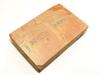
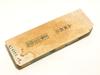
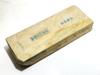
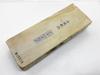
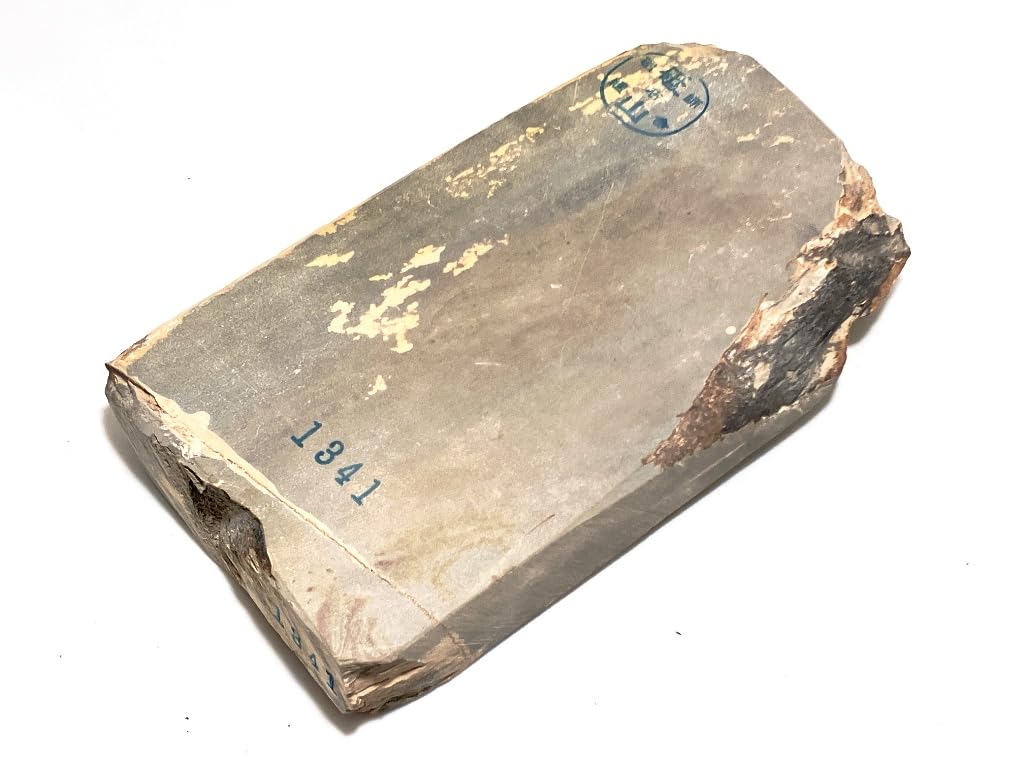
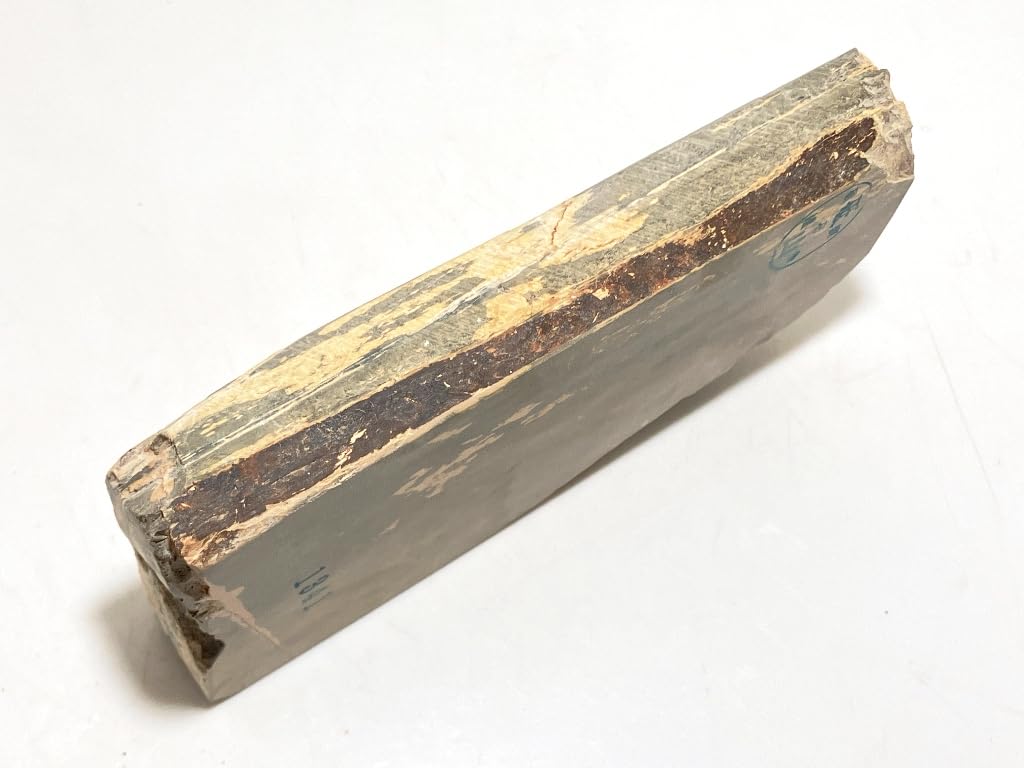
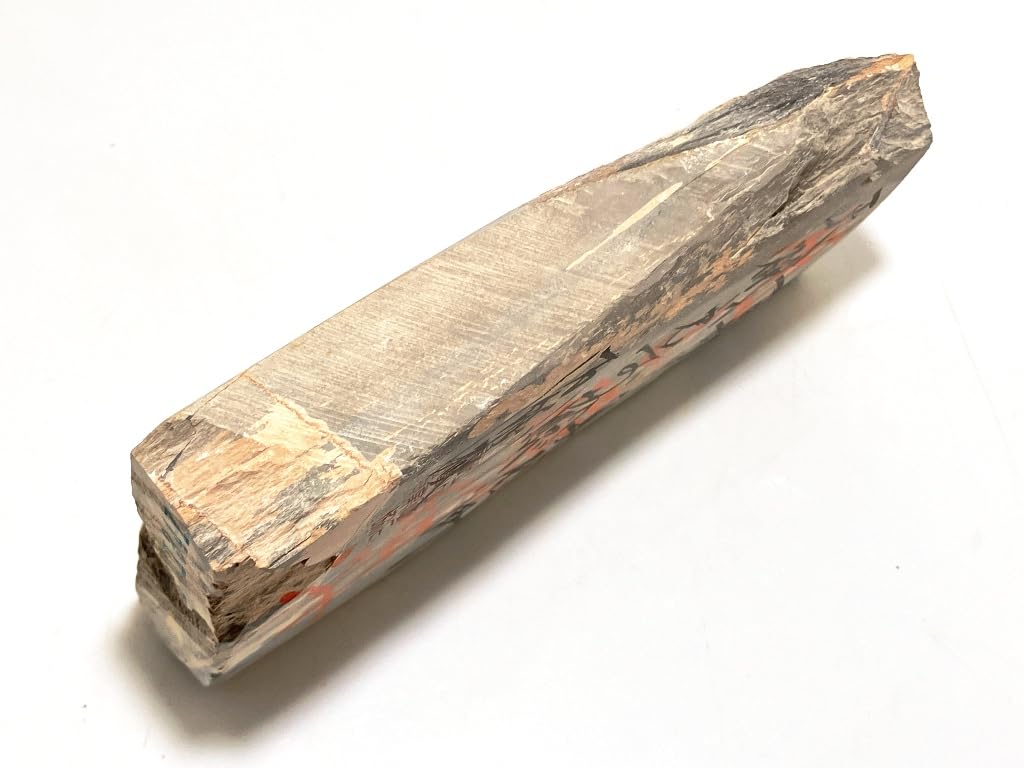
75 x 140 x 25 mm, 537g. The ink markings can be removed with water. If you want to fix them in place, it is best to coat them with a 2-4 times diluted solution of stone curing liquid. They will disappear unless applied with a roller or by dropping drops and applying them like a spray painting. The stone curing liquid can be removed with kerosene.
If you require a certificate of origin, handwritten inscription on the side, etc., please contact us as the product must be collected by our cooperative before purchase. You can search for the product on Amazon using the code B0GDXTPFVS.
The darker the rock, the harder and finer the stone tends to be. Since hardness reduces the sharpness, sharpening should be done by applying a nagura (a type of stone used for sharpening) as needed, depending on the purpose and skill level.
How can we continue to create "even better grinding wheels"?
〇Ashamed of the current situation where people say, "Playing with a toss wheel is like gambling or a matter of compatibility," let's think and consider every day, "Let's make a better toss wheel," and let's ask everyone without being embarrassed.
Even if they are thin, slender, or compact, let's not be careless or cut corners, and let's carefully ensure they fulfill their true purpose as tools. Because they hold the power to cultivate a repair spirit that leads to a better sharpening life for everyone.
Let's show our gratitude to our predecessors at Toyama by keeping it clean and bright. It is because of the accumulation of work that has continued for so long that we can enjoy the convenience and abundance we take for granted today. Let's cherish and protect what we are grateful for, both visible and invisible, and never forget it.
Let's properly convey the intangible inner assets of the whetstone craftsman and continue making "even better whetstones" so that everyone can continue to enjoy a happy sharpening life.
This product is a jointly sold product of a Kyoto Prefecture-approved business cooperative related to mining, established by several whetstone landowners and whetstone craftsmen with business areas in Narutaki and Umegahata, Ukyo Ward, Kyoto City, who came together with this vision.
In order to ensure local production and manufacturing within the project area, we will centralize joint erosion control management, mining, ore sorting, and manufacturing within our cooperative. This will allow us to provide more accurate and detailed information about the origin of the ore, and also contribute to quality control.
The geological information on mineral deposits, construction techniques, and stone forging methods, which have been passed down continuously from the Honma family of the Jingoji territory since the late Heian period and from the Yamamoto family since the early Edo period, are currently based on oral tradition and reliance on experience in apprenticeship relationships. To address these concerns for the future, we advocate for joint ownership and supplementation, hoping to create an environment for training future generations and ensure the continuation of this traditional industry for generations to come.
While geographical information is certainly essential for mining, we hope that by burning with passion every day to "make even better grinding wheels," and by thinking together, listening to everyone, and steadily putting in the effort, better successors will emerge, and "even better grinding wheels" will continue to be produced.



 No-delivery refund