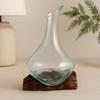
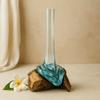
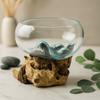
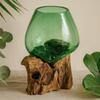
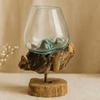
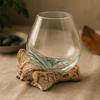
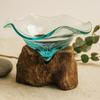
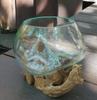
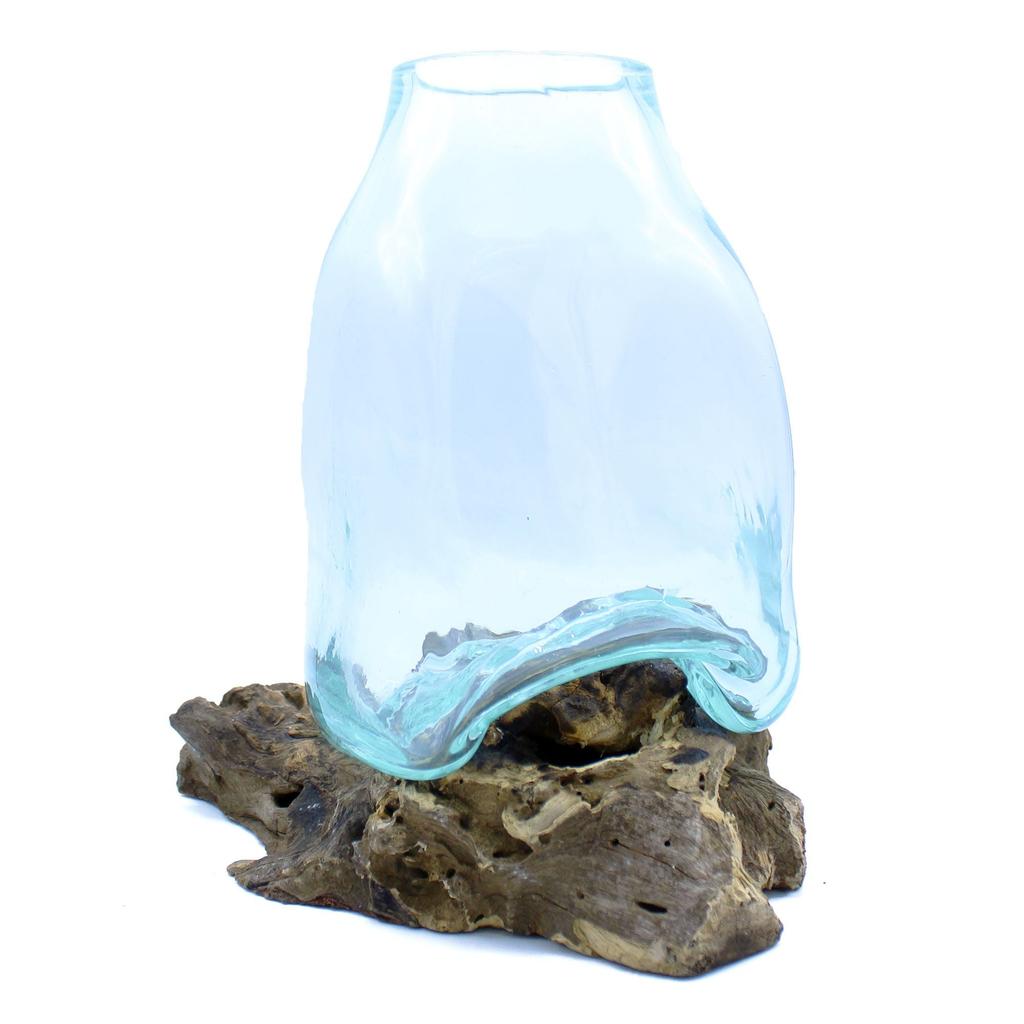
Molten glass catches the light like still water, then falls into the ridges of a Gamal wood root base. This handmade glass vase from Indonesia is part vessel, part sculpture, made for a table, shelf or quiet corner that needs one natural focal point.
Where clear glass meets weathered root
The glass has a pale aqua tint at the edges, giving the whole piece a cool, watery softness.
Its lower rim follows the uneven shape of the root, so the vase looks as though it has settled there naturally.
The wood brings rough grain, hollows and darker knots, a strong contrast to the smooth glass above it.
It works beautifully as a terrarium-style jar, a sculptural vase, or a simple display vessel for dried stems.
Small bubbles and light surface marks may appear in the glass, part of the handmade character rather than a fault.
Hand-shaped glass on Gamal wood
The piece is made from glass and Gamal wood, also known as Gliricidia sepium. While the glass is still warm, it is shaped over the contours of the root, allowing the base to guide the final line of the vessel.
That process means each piece varies slightly. The glass edge, the root shape and the way they meet will not be perfectly uniform, which is exactly where the charm sits.
Styling it at home
Place it where light can pass through the glass, near a window, on a console table, or at the centre of a low shelf. The clear blue tone feels especially at home with linen, stone, rattan, pale timber and organic-modern interiors.
Use it for a dry botanical arrangement, a minimal terrarium-style display, or leave it empty so the glass and root can carry the room on their own.
Care for glass and root wood
Wipe the glass gently with a soft cloth. Keep the wood base away from standing water and prolonged damp, and dry any spills straight away.
If you use it with plants or fresh stems, keep moisture contained in the glass and avoid letting wet soil, moss or water sit against the wood.
Bali craft, natural form
This…
region of manufacture: Indonesia




 No-delivery refund