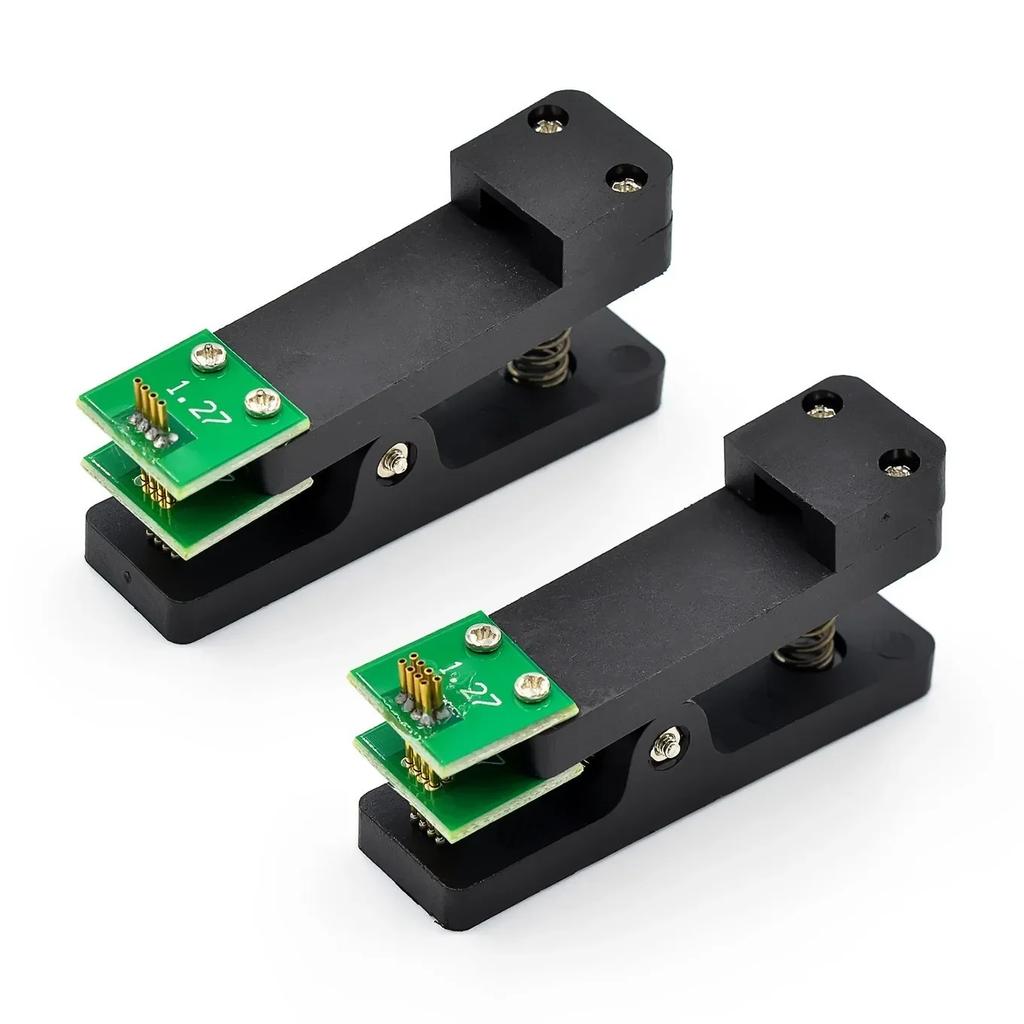
modname=ckeditorThe PCB Clip Clamp Fixture with Pogo Pin is a professional and versatile tool designed for PCB testing, program downloading, and firmware burning, widely used in electronic R&D, production testing, and maintenance. It integrates reliable clamping, precise probing, and convenient programming functions, making it an essential accessory for electronic engineers and production personnel.
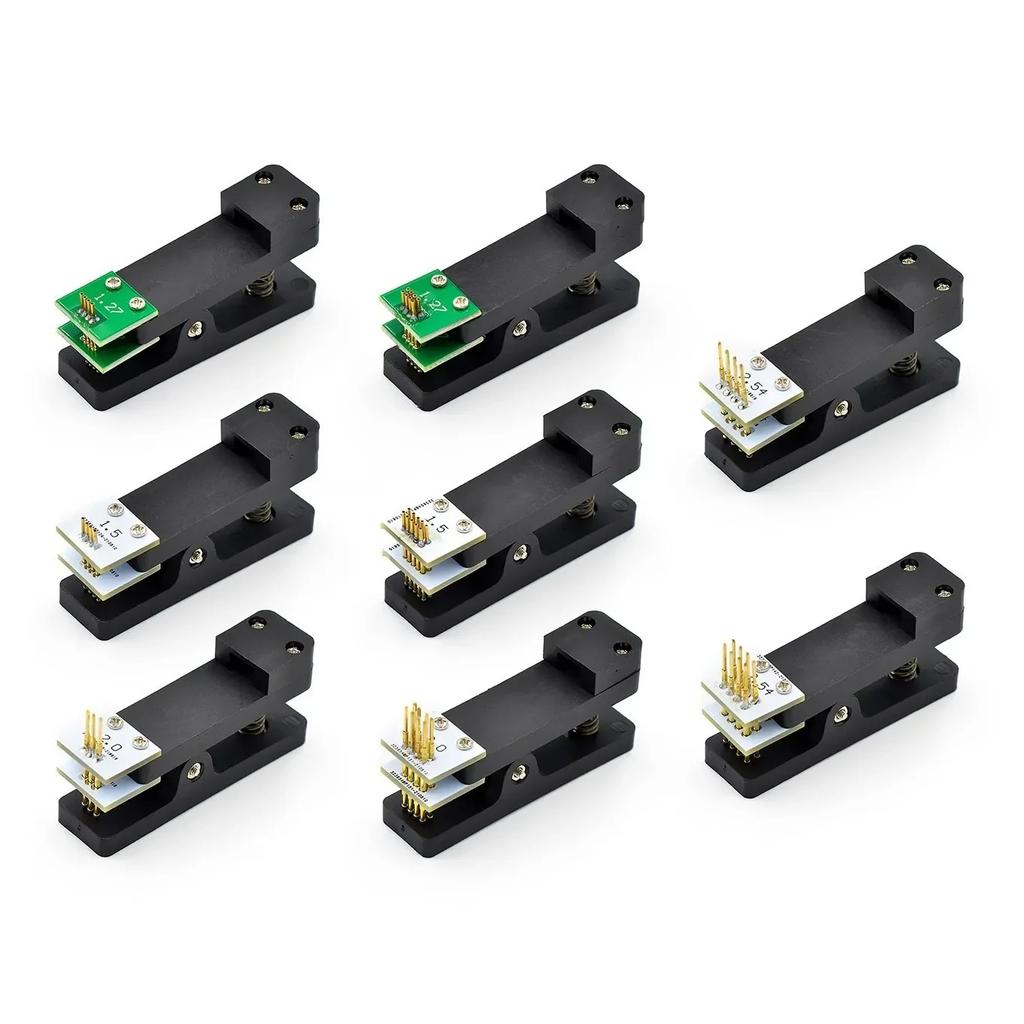
This fixture supports multiple pin pitches to meet different PCB design needs, including common specifications such as 2.54mm, 2.0mm, 1.5mm, 1.27mm, 1.25mm, 100mil, and 50mil. It also offers various pin count options (3P, 4P, 5P, 6P, 7P, 8P, 9P, 10P), ensuring compatibility with different PCB interfaces and testing requirements. The adjustable clip clamp design allows for firm and stable fixing of PCBs of various sizes, preventing displacement during testing or programming, which ensures the accuracy of operation.
Equipped with high-quality pogo pins, the fixture features excellent conductivity and wear resistance, enabling stable contact with PCB pads or pins. The pogo pins have good elasticity, which can effectively compensate for small gaps between the fixture and the PCB, avoiding poor contact caused by uneven PCB surfaces. This ensures smooth signal transmission during program downloading and burning, as well as accurate data collection during PCB testing.
The fixture is specifically designed for download program and burn operations, compatible with most common programming tools and microcontrollers. It simplifies the programming process—users only need to fix the PCB on the clamp, align the pogo pins with the corresponding pads, and connect the fixture to the programming device to start downloading or burning firmware. This not only improves work efficiency but also reduces the risk of manual operation errors, such as incorrect pin connection.
With its compact structure, lightweight design, and easy operation, the PCB Clip Clamp Fixture Probe Pogo Pin is suitable for both laboratory R&D and mass production lines. It is widely used in consumer electronics, industrial control, automotive electronics, and other fields, providing reliable support for PCB testing, program burning, and product quality inspection. Its versatility, compatibility, and stability make it a cost-effective tool for electronic manufacturing and maintenance.



 No-delivery refund