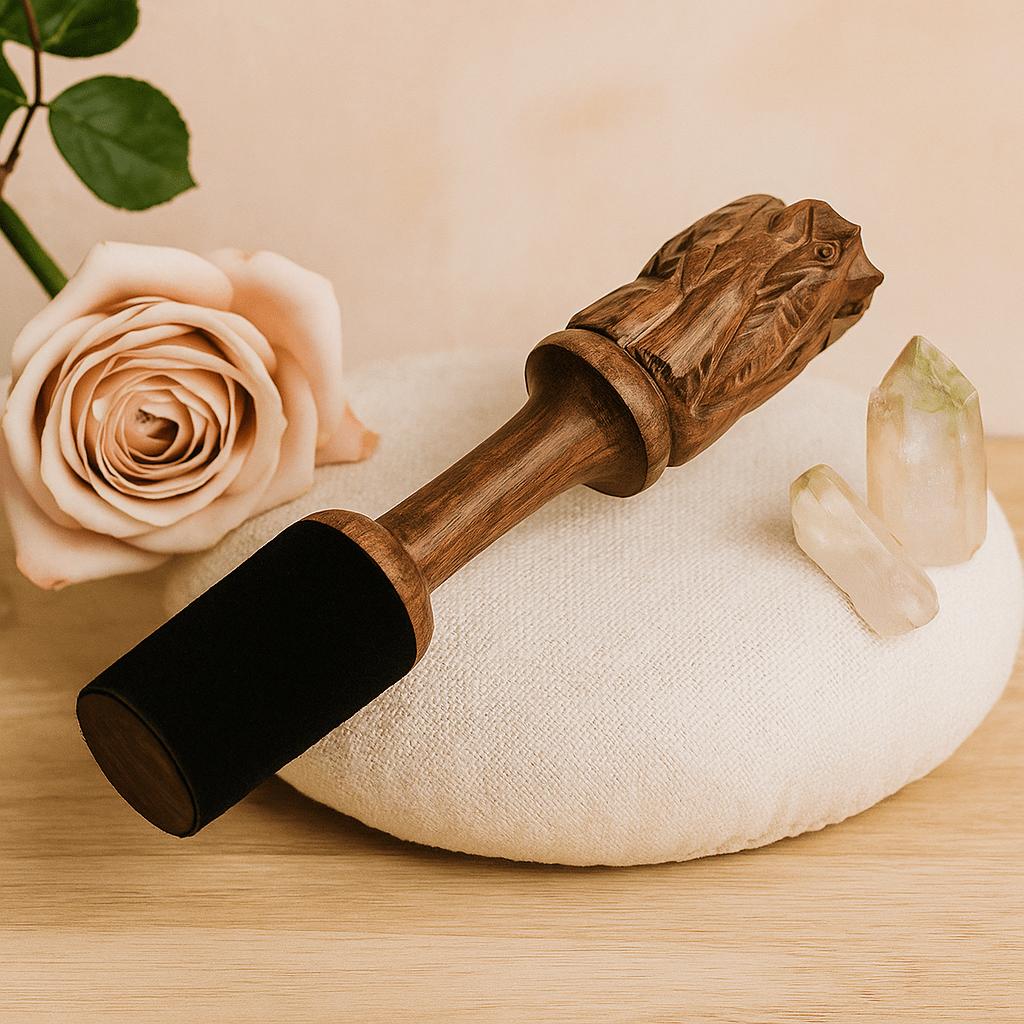
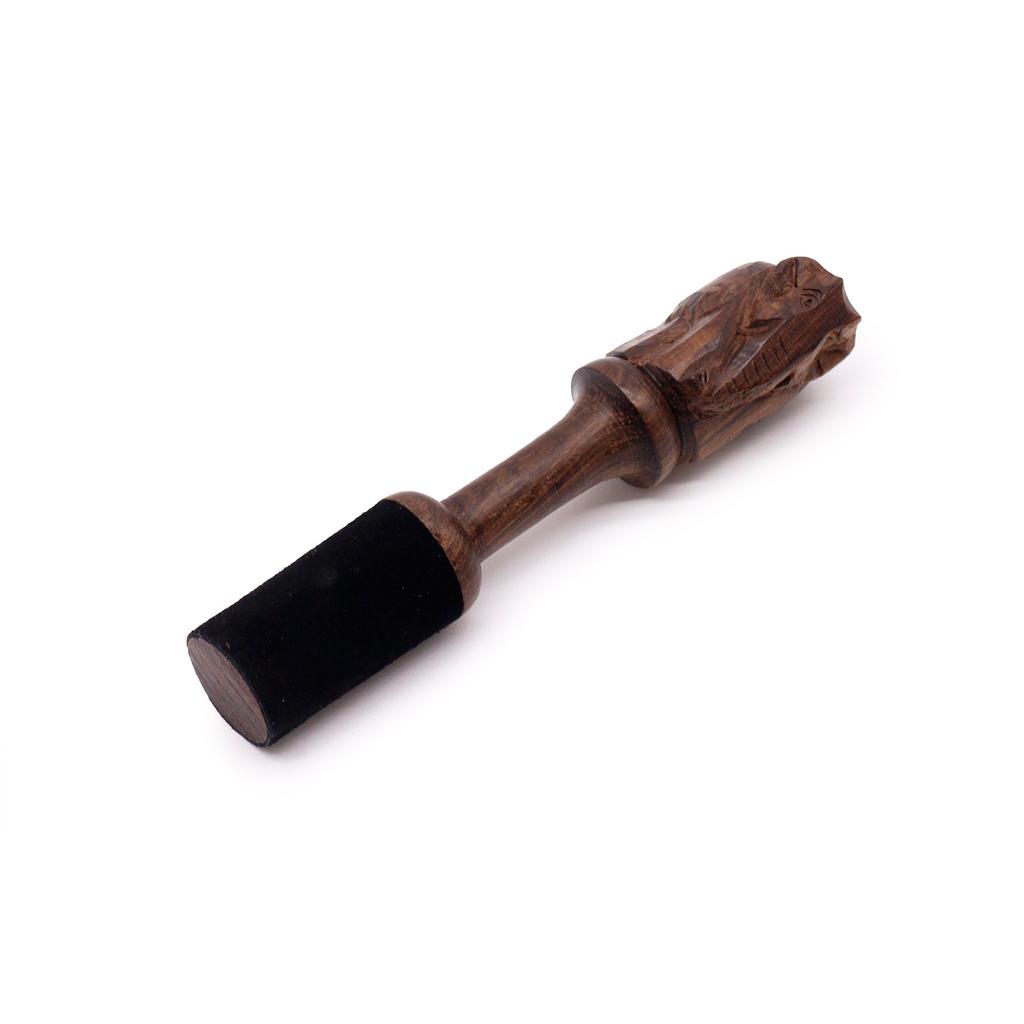
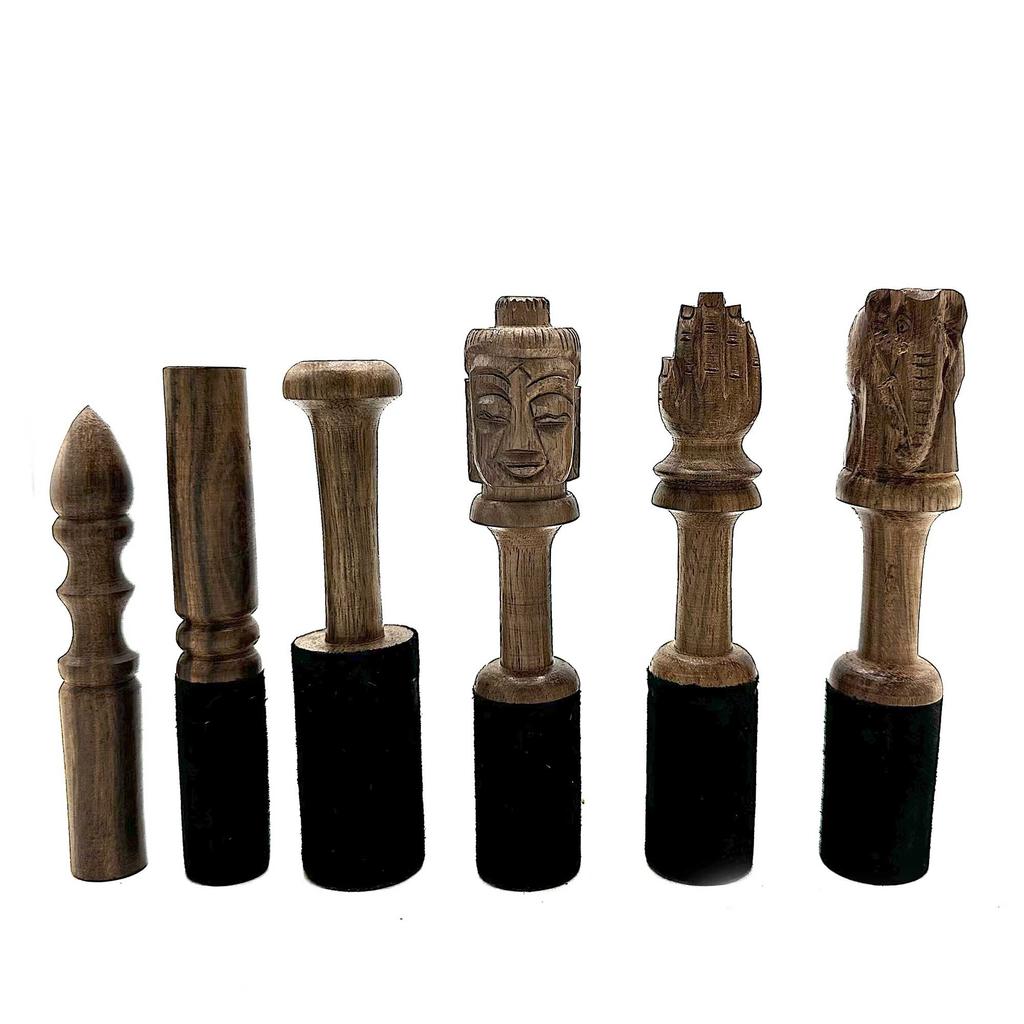
A wooden singing bowl mallet gives the bowl its first voice: the clean contact of timber on metal, the small pause, then the sound opening into the room. This piece is made from Terminalia elliptica wood and finished with an elephant carving, so it feels like a considered tool rather than a plain accessory.
The feel of a wooden striker
Bare wood gives a direct, clear strike, useful when you want to hear the bowl’s natural tone.
The carved elephant motif adds quiet character without turning the piece into ornament alone.
Its simple stick form suits measured tapping and slow rim work, depending on the bowl you pair it with.
Wood against metal feels precise and tactile, with more definition than a soft padded beater.
Keep it beside a bowl or gong so the ritual of playing is ready whenever the room needs sound.
Carved wood from Nepal
The mallet is made in Nepal from Terminalia elliptica, a hardwood used here for strength, touch and visual warmth. The elephant carving gives the handle a small sculptural presence, echoing a long South Asian association with patience, steadiness and good fortune.
How it works with your bowl or gong
Use the wooden end to strike the rim or outer wall with a light, controlled movement. A harder wooden mallet gives a more defined contact than felt or suede, so start gently and listen to how your bowl responds.
For rim playing, hold the stick with relaxed pressure and move steadily around the outside edge. Different bowls answer differently, so the best match is found by feel, sound and practice.
Keeping the wood in good condition
Store it somewhere dry, away from prolonged damp. Wipe with a soft dry cloth after use, especially if it has been handled often, and avoid knocking the carved detail against hard surfaces.
A tool within singing bowl practice
In Himalayan and Tibetan singing bowl practice, the striker is part of the instrument’s voice, not an afterthought. Players often choose different mallets for different re…
region of manufacture: Nepal


 No-delivery refund








![Singing Bowl Tibetan Singing Bowl Tiny 10cm Mana Purification Healing Overtone Meditation Certified [Amana Official] Professional/Association](https://img.joomcdn.net/262e96c42ce019a8893ea27731248abab6531a77_100_100.jpeg)