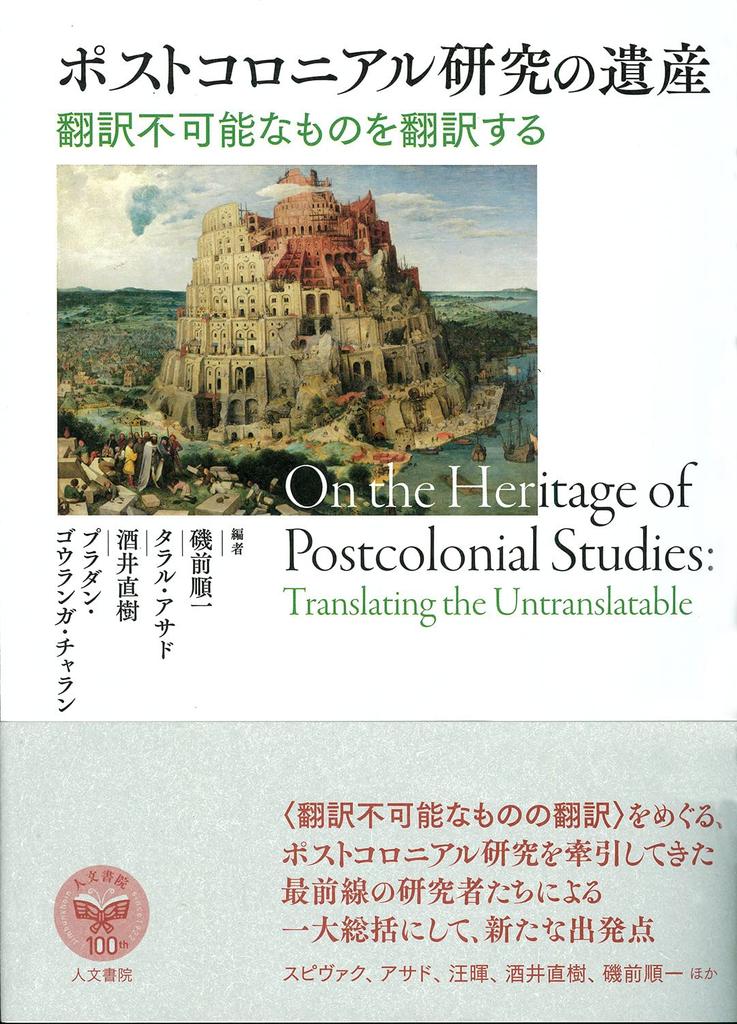
This comprehensive summary and new starting point, brought together leading researchers in postcolonial studies, explores the topic of "translating the untranslatable."
In February 2020, leading thinkers in postcolonial studies gathered in New York. The untranslatable exists everywhere—between different cultures, between politics and culture, between men and women, and more. Is translation possible beyond these? This international conference, hosted by Nichibunken, explores the otherness and incomprehensibility of human relationships.
Table of Contents
Preface by Junichi Isomae, Katsuya Hirano, and Pradhan Gouranga Charan
Opening Remarks: The Japanese Language Research Center in Times Square, Hiroshi Araki
Overview by Talal Asad (Translated by Shinji Aketa)
Part 1: Translating the Untranslatable
Chapter 1: Translating the Untranslatable: A Summary of Postcolonial Studies by Junichi Isomae
Chapter 2: How to Count Languages and Divide Humanity by Naoki Sakai (Translated by Kazuma Omura)
Chapter 3: The Legacy of Translation and Postcolonial Studies by Gayatri Chakravorty Spivak (Translated by Kenta Funahashi)
Chapter 4: Translating God(s): Religious Studies in the Postcolonial Era by Gent de Vries (Translated by Hiroshi Kubota)
Part 2: The Politics of Translation in East Asia
Chapter 5: Sake vs. Wine: On Natsume Soseki's Concept of "Cultural (Im)translatability" Pradhan Gouranga Charan (translated by Akihiro Yamamoto)
Chapter 6: Settler Colonial Translation: "Civilizing" Activities and the Voice of the Ainu, Katsuya Hirano
Chapter 7: Reinterpreting Japan's Expansionist Ideology: Korean Participants in the Wartime East Asian League Movement, Toshihiko Matsuda
Chapter 8: Twentieth-Century China as Translation: Conditions in China and the Spatial Revolution, Hui Wang (translated by Kenji Murashima)
Part 3: Roundtable Discussion
What is the Untranslatability in Postcolonial Translation Theory?
Naoki Sakai, Marion Eggert, Hent de Vries, Gayatri C. Spivak, Manami Yasui, Ayako Kusunoki, Katsuya Hirano, Seo Jung-wan, Toshihiko Matsuda, Pradhan Gouranga Charan, Junichi Isomae (translated by Kenji Murashima)
Epilogue Junichi Isomae, Pradhan Gouranga Charan
Afterword: Toward the Future of the Humanities and Social Sciences, Manami Yasui


 No-delivery refund