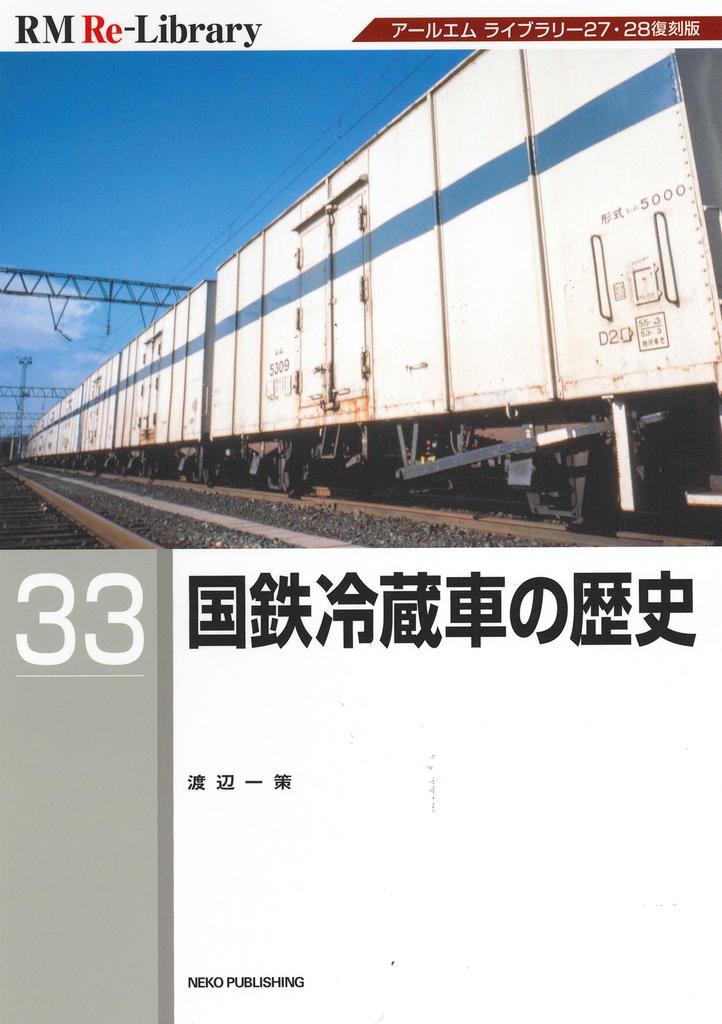
RM Re-Library is a series of reprints of two or three classic volumes from the long-running RM Library, which has already reached over 290 issues. The 33rd volume in the series is a reprint of RM Library volumes 27 and 28, "The History of JNR Refrigerated Cars (Vol. 1 and 2)" (both by Watanabe Issaku).
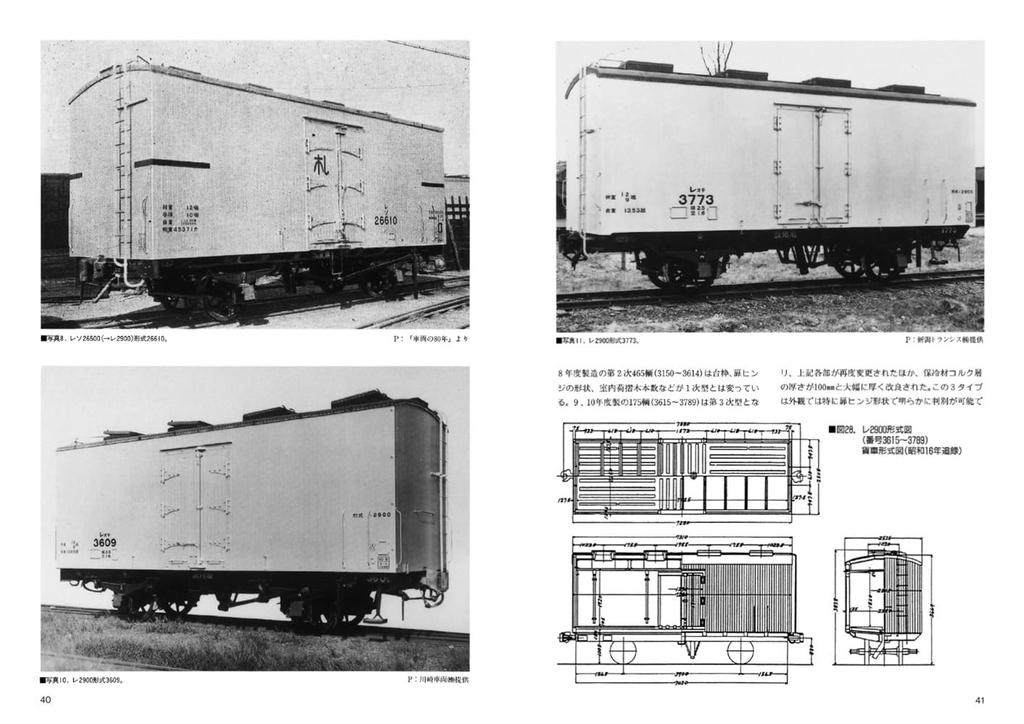
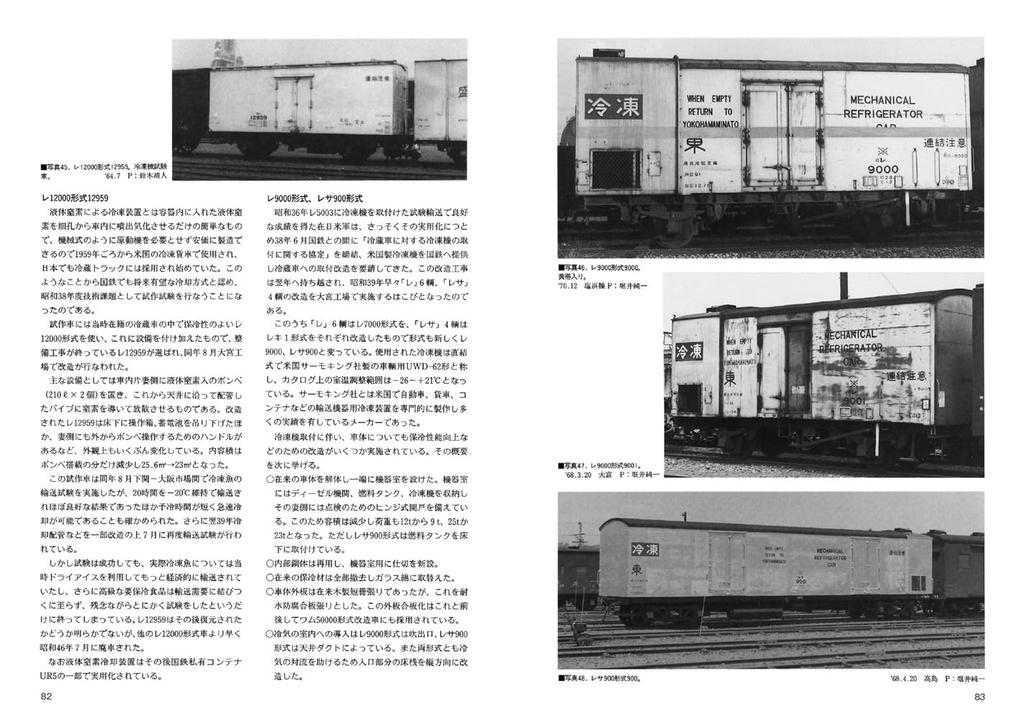
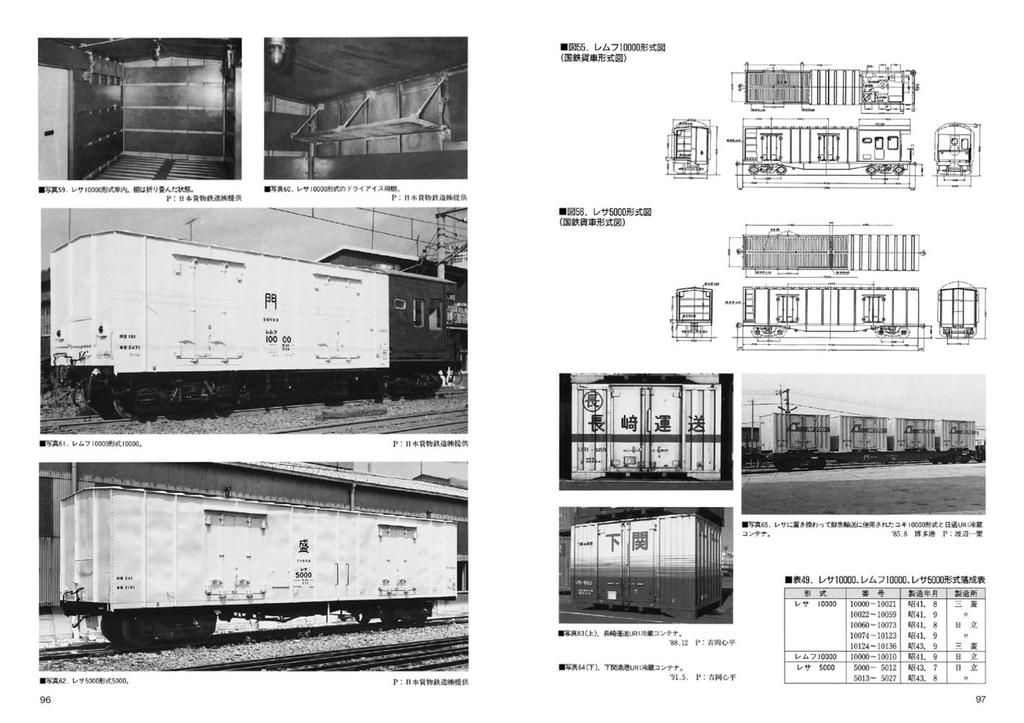
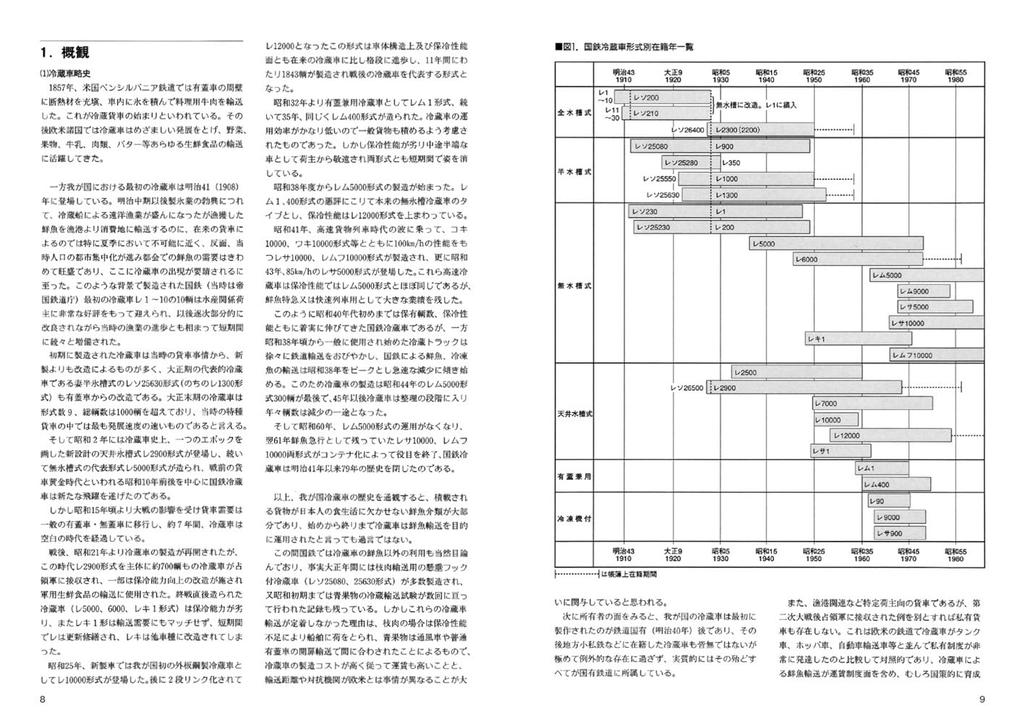
Refrigerated cars developed for transporting fresh food, particularly fresh fish in Japan. Their history dates back to the Meiji era, when, with the development of deep-sea fishing, they formed an important lifeline connecting remote ports with major cities. The basic structure of these refrigerated cars was to wrap the body in thick insulation, with cooling achieved primarily by loading ice onto them. Mounting the refrigerator unit on the vehicle, as seen in modern refrigerated trucks, was not common in Japan; instead, ice was stored in an isolated area called an ice storage area, or ice was placed inside a "fish box" along with the fish to maintain cooling for long periods of time.
Of course, various trial and error processes were undertaken in the development process, and it is interesting to note that the position and existence of refrigerated trains have seen frequent swings back and forth throughout history. Furthermore, because their structure inevitably makes them expensive to manufacture, vehicles with simpler equipment were frequently introduced only to end up with mediocre results, making their history truly dramatic.
One of the most shining figures in the history of refrigerated cars are the trains dedicated to transporting fresh fish, equipped with high-speed freight cars, and this book provides a detailed account of their history, operation, and demise.
Starting from the early days, when only drawings were available, this book includes numerous documents, such as specification tables for each type and a comparison table of old and new numbers, as well as a wealth of illustrations explaining their structure. This is truly the definitive work that tells the entire history of refrigerated freight cars.





 No-delivery refund




![DVD [DVD] - E531 Series Joban Line Limited Expr TEBD38080 Japan Movies & DVD Used](https://img.joomcdn.net/cce0cbe743a84270e583059da4c8c31e008aaa6c_70_100.jpeg)