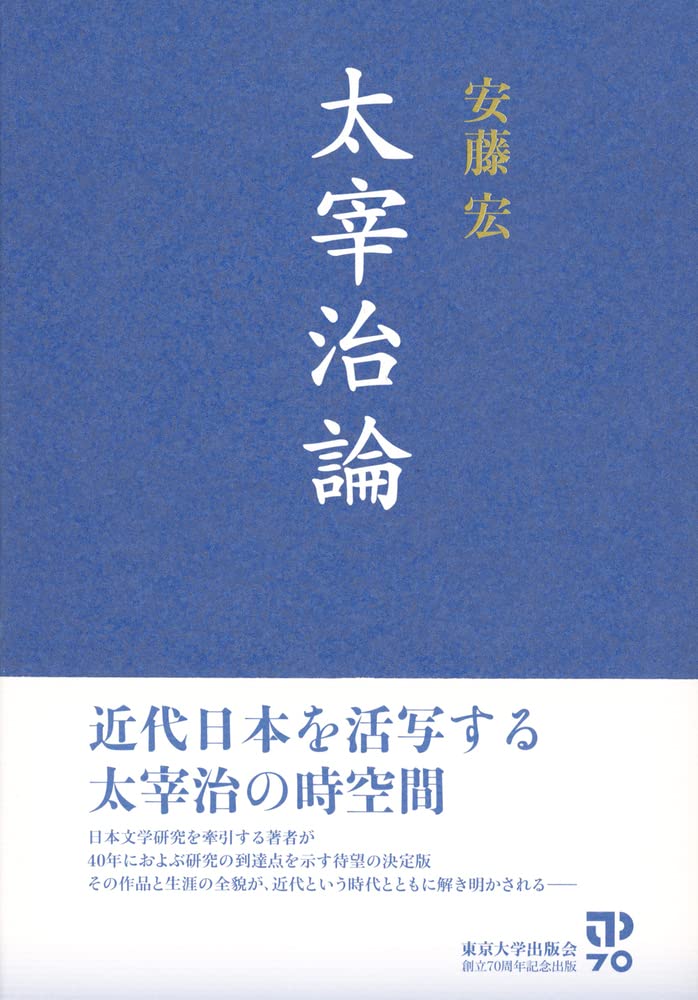
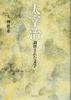
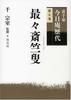
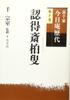
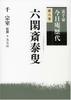
The definitive guide to Dazai Osamu's life and work
While the author's image and the way his works are read have changed over the years, this comprehensive book explores the literary legacy of Dazai Osamu, whose popularity continues to grow. This definitive study of Dazai Osamu, written by a leading author in Japanese literature, sheds light on the portrait of a man who lived faithfully through a turbulent era, clumsily and anachronistically, and who, deepening in despair, sacrificed himself to his destiny. It also highlights the state of modern Japan. Published in commemoration of the 70th anniversary of the founding of the University of Tokyo Press.
[Features of this Book]
● This book thoroughly analyzes all of Dazai's works, from his classic Japanese textbook staples "Run, Melos" and "One Hundred Views of Mount Fuji" to his best-selling works "Shayo" and "No Longer Human," as well as his early notebook scribbles.
● The appeal of Dazai Osamu, whose works have continued to grow among young readers more than 70 years after his death, is revealed, with recent adaptations including film and manga.
This book reveals the full story of Dazai Osamu, including his interactions with contemporary writers and actors, stories surrounding his famous portraits, and new information about his family home, the Tsushima family.
[From the book's "Prologue: The Time and Space of Dazai Osamu"]
Dazai Osamu is no longer necessarily a "Buraiha" (outlaw) figure. His work offers various insights into how we can use words to create distance and distance from those around us.
In our unprecedented information society, we face the urgent issue of how we should determine the distance between ourselves. (Omitted) Dazai lived through the turbulent early Showa period and continued to boldly confront this issue through his linguistic practice. His "Kokorozukushi" style, which whispers quietly, "I'll teach you alone," and "I'm sure you'll understand," raises new possibilities for "solidarity" in this situation.
[Main Table of Contents]
Preface: Dazai Osamu's Time and Space
Part I: The Infancy
Chapter 1: "Peasants" and "Aristocrats"
Chapter 2: The Dual Structure of Self-Esteem
Chapter 3: The Fiction of "Prodigal Blood"
Chapter 4: The Genealogy of "Sad Mosquito"
Chapter 5: Tsugaru and Tokyo - The Significance of "Two Hundred Ri"
Part II: The World of "Bannen"
Chapter 1: From Study to "Bannen"
Chapter 2: Introduction to "Bannen"
Chapter 3: Mystery in the Mountains - A Study of "Gyofuku-ki"
Chapter 4: The Method of Recollection - A Study of "Memories"
Chapter 5: What is Allegory? - A Study of "Sarugashima" and "Map of the Earth"
Chapter 6: The Season of Suicide - A Study of "The Clown's Flower"
Chapter 7: Self-Consciousness and the Image of "Death"
Chapter 8: The Novel of the "Novel" - A Study of "Sarumenkanja"
Chapter 9: Between Poetry and Fiction: A Study of "Toys"
Chapter 10: The Logic of Prose Poetry: A Study of "Leaves"
Chapter 11: "The Late Years" and "Tsugaru" - "Suzumeko" and Other Works
Chapter 12: Conversion, Shestov, and Pure Novels
Chapter 13: The Lying Artist - A Study of "Romanesque"
Chapter 14: The Aesthetics of Escapism - A Study of "Retrogression"
Part III: The World of Mid-Period Works
Chapter 1: The Emergence of "Sin" - The Collapse of "The Late Years"
Chapter 2: Dazai Osamu's Theatrical Space - Focusing on "Das Gemeine"
Chapter 3: The Truth and Fiction of the Second "Conversion" - Focusing on the Unfinished Draft "College Humor: The Tokyo Imperial University Volume"
Chapter 4: The Logic of "Laziness" - From "The Karuta of Virtue" to "The Karuta of Laziness"
Chapter 5: Re-narrating the "Self" - A Study of "On Love and Beauty"
Chapter 6: The Discrepancy Between "Life" and "Art" - A Study of "One Hundred Views of Mount Fuji"
Chapter 7: The Sensibility of a Female Student
Chapter 8: Women's Stories
Chapter 9: The Conditions of a Novel - A Study of "Women's Duel"
Chapter 10: Melos's Skepticism - A Study of "Run, Melos"
Chapter 11: Dazai Osamu and "Tokyo" - Focusing on "Eight Views of Tokyo"
Part IV: From Wartime to Postwar
Chapter 1: From Wartime to Postwar
Chapter 2: The Logic of the Wandering Child - "Daffodils" and "Fireworks"
Chapter 3: The Structure of "Tsugaru"
Chapter 4: Adaptation and Parody - A Study of "New Interpretation of Provincial Stories"
Chapter 5: "August 15th" and Evacuation Literature
Chapter 6: The Dramaturgy of "Shangri-La" - "Winter Fireworks" and "Autumn Leaves"
Chapter 7: Postwar Literature and the "Buraiha" School
Chapter 8: Postwar Representations of Women - Focusing on "Villon's Wife"
Chapter 9: The Aesthetics of "Horobi" in "The Setting Sun"
Chapter 10: The Failure of "Tragedy" - A Study of "No Longer Human"
Chapter 11: The Desire for Relationships - The Structure of "No Longer Human"
Chapter 12: The Creative Process of "No Longer Human"
Chapter 13: Traces of His Final Years