Ships from Japan
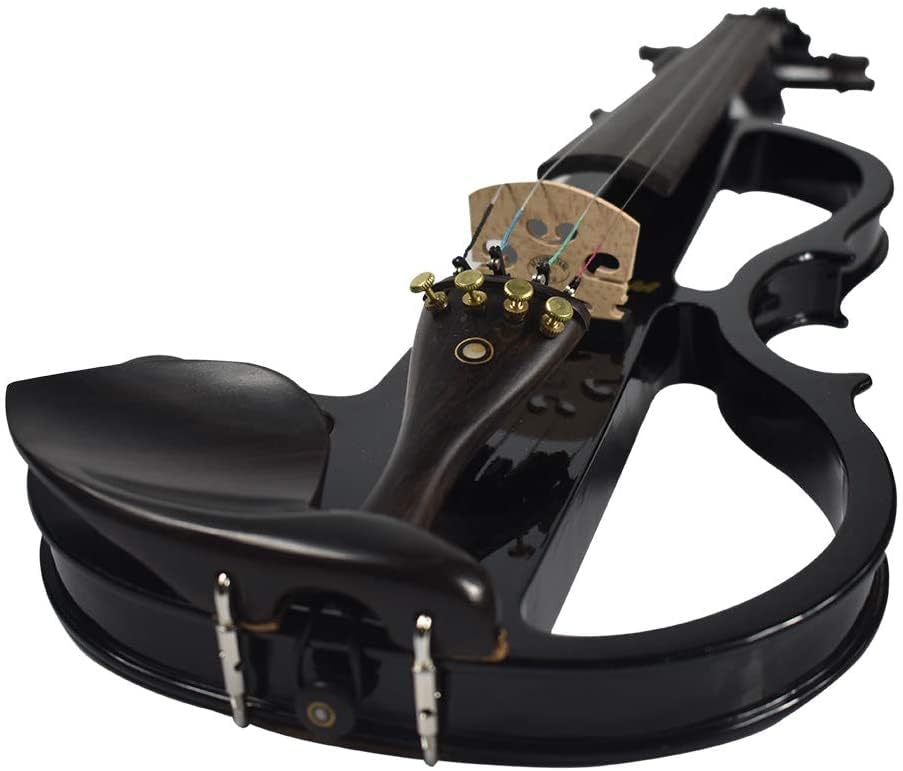
Weight: 1.6kg Case size: 80cm*15cm*29cm ▲Note: When rotating the pegs, rotate them lightly and slowly to avoid cutting the strings. The chin rest, fingerboard, tailpiece, and pegs are made of ebony!
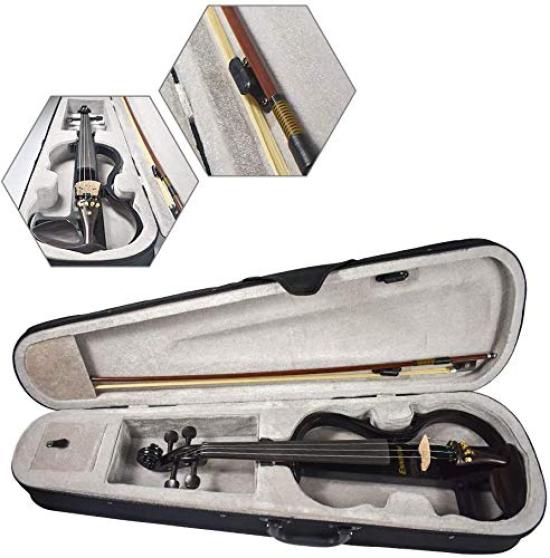
Set contents: Improved electric violin, octagonal bow, case, large rosin (), bridge, headphones, 9V battery, AUX cable (Note: If you have any problems with the headphones, please contact us.)
This set comes with all the essential items you need to play, so even beginners can play and practice with confidence. It comes in a special case, so you don't have to worry about damaging the main unit, and it's convenient and safe to carry.
We've improved the chin rest, tailpiece and pegs! We've also changed the bow and rosin to better ones.
Please note: ❶You need to push the peg in a little, not just rotate it. Pull the peg outward a little to move it. Adjust the string slack, then push the peg inward to fix it.
❷You can adjust the slackness of the octagonal bow by turning the screw on the top of the bow. The piano finish gives the smooth, shiny surface and the heavy body a sense of elegance and luxury. If you are concerned about the smell after opening, dry it in the shade in a well-ventilated place before using it. It will be reduced to an unnoticeable level within a few days to a week. The smell when opened is unique to new products and is harmless. Trademark registered (registration number: 6082603)
Tuning method (there is no tension on the string): 1 Adjust the adjuster of the koto tail: The screw is tightened clockwise and the screw is loosened counterclockwise. If there is no tension on the string, you can adjust it by tightening the screw clockwise. Do not use too much force when turning the screw, otherwise it may be damaged. 2 Adjust the koto axis: Before adjusting the koto axis, loosen the tightening screw slightly. You can use a little force to adjust the koto axis. If the koto axis cannot move, apply axis wax to reduce the friction force. Note: During screw tuning, adjusting one note will also change other notes. For example, suppose the e string goes out of tune when you adjust the a string. This is a normal situation when tuning a violin. Gently stir the e string between the bridge and the screw, and the sound will return. Or you can repeat tuning many times until the sound is accurate. E string cannot be adjusted: If the adjuster screw is fully tightened and the string cannot be readjusted, you can adjust it by first loosening the screw and then tightening it. Screw is loose: The screw is tightened clockwise and the screw is loosened counterclockwise. String is broken: The spare string is in a small box in the koto case, and the string can be adjusted by turning it counterclockwise.
If it breaks, you can replace it. The upper peg of the adjuster cracks: The button is a metal product, not easy to break, but it may crack, and fine cracks will not affect the tuning, so please use it with confidence. Note: When tuning, the bridge must be aligned. The tuning of the violin is more complicated than that of a normal instrument, and if you cannot adjust the tone within an hour or two, it is normal, so please repeat the adjustment several times until the adjustment is complete. If you cannot ensure that you can adjust the tone by yourself, please seek professional help.










![Electric Violin Set Size 4/4 ESV-380 S-BLK [ ]](https://img.joomcdn.net/86b5e4985570f65465ef0512c5bfae6ac0cd3093_100_100.jpeg)


![Silvio Violin Solid Wood Solid Wood Violin Set [High-Quality Violin] High-Quality 4/4 (Beginner) - Edge-Processed](https://img.joomcdn.net/8666be08fae88fa9505eeb62f933e7768353fcd8_100_100.jpeg)
![Kiktani Electric Violin Set Size BROWN 4/4 ESV-380 []](https://img.joomcdn.net/59006c4907a240c4ab183c6bc1cfb31c3968c25e_100_100.jpeg)