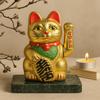
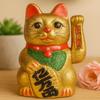
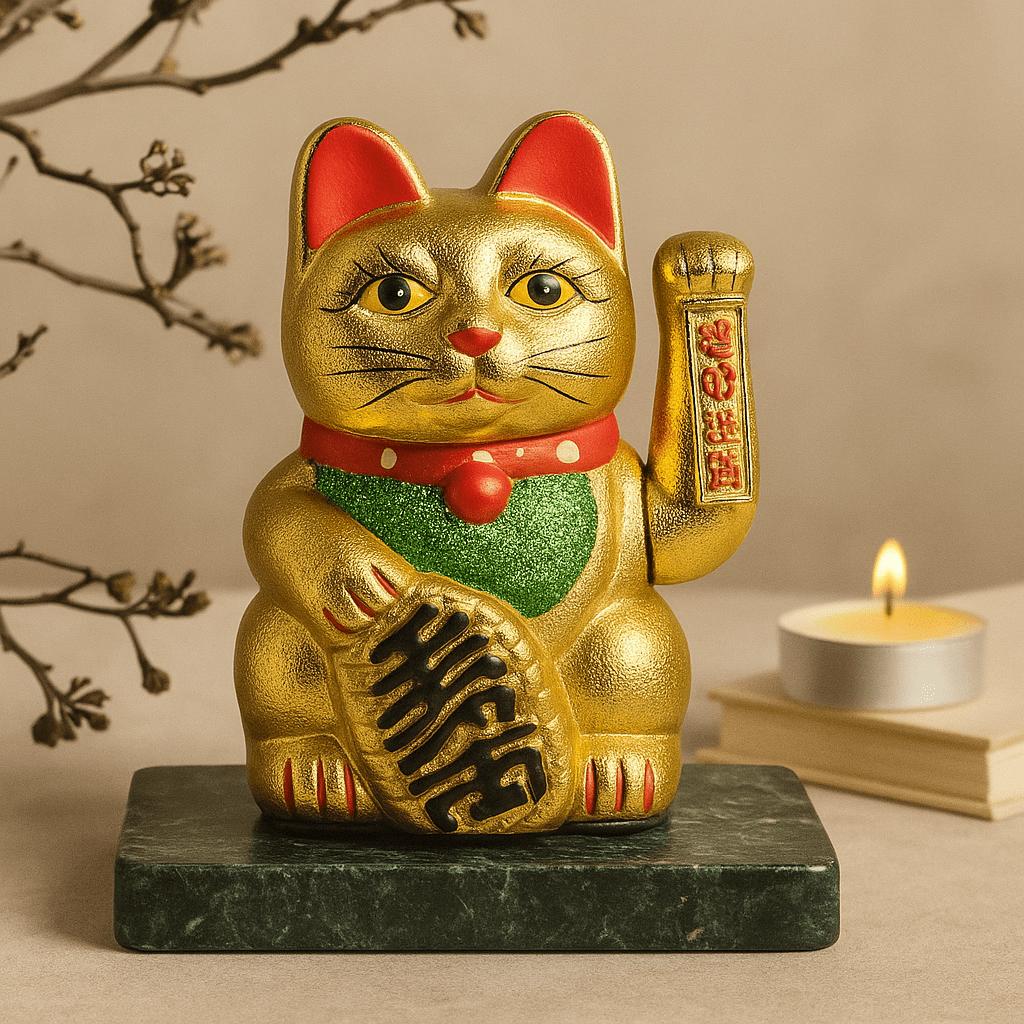
A small welcoming gesture changes the mood of a shelf, till point or hallway table. This porcelain Maneki Neko brings the familiar raised-paw charm into the room, with a left paw that moves back and forth in a steady beckoning motion. It is cheerful décor with a rooted folk tradition behind it, made for adding a note of good fortune to an everyday corner.
The charm of the moving paw
The left paw waves continuously when the batteries are in, giving the cat a gentle sense of life.
Its upright posture makes it easy to place where people arrive, pause or pass by.
The porcelain gives it a traditional decorative feel, while plastic parts support the moving mechanism.
It suits a shop counter, home office, entrance shelf or money corner, where its symbolism feels intentional.
The expression and beckoning gesture make it friendly rather than formal, a small object with personality.
Porcelain body, battery-powered movement
It is made from porcelain and plastic, with a powered waving arm rather than a static pose. The piece is made in China, while the Maneki Neko tradition itself comes from Japanese folk culture.
How to place and look after it
Add the required batteries to start the waving motion. Batteries are not included.
The battery compartment has no cover and there is no on/off button, so the paw is designed to move constantly while the batteries are fitted. To stop the movement, remove the batteries. Keep it on a stable, dry surface and wipe gently with a soft cloth.
The beckoning cat in tradition
Maneki Neko, often translated as the beckoning cat, is a Japanese good-luck figure associated with welcome, fortune and friendly invitation. The raised paw can look like a wave to Western eyes, but in Japan the beckoning gesture is made with the palm facing down. These cats are often placed near entrances, counters and household shrines, not as a guarantee of riches, but as a warm symbol of openness and auspicious welcome. A moving paw gives that old ges…
region of manufacture: China




 No-delivery refund